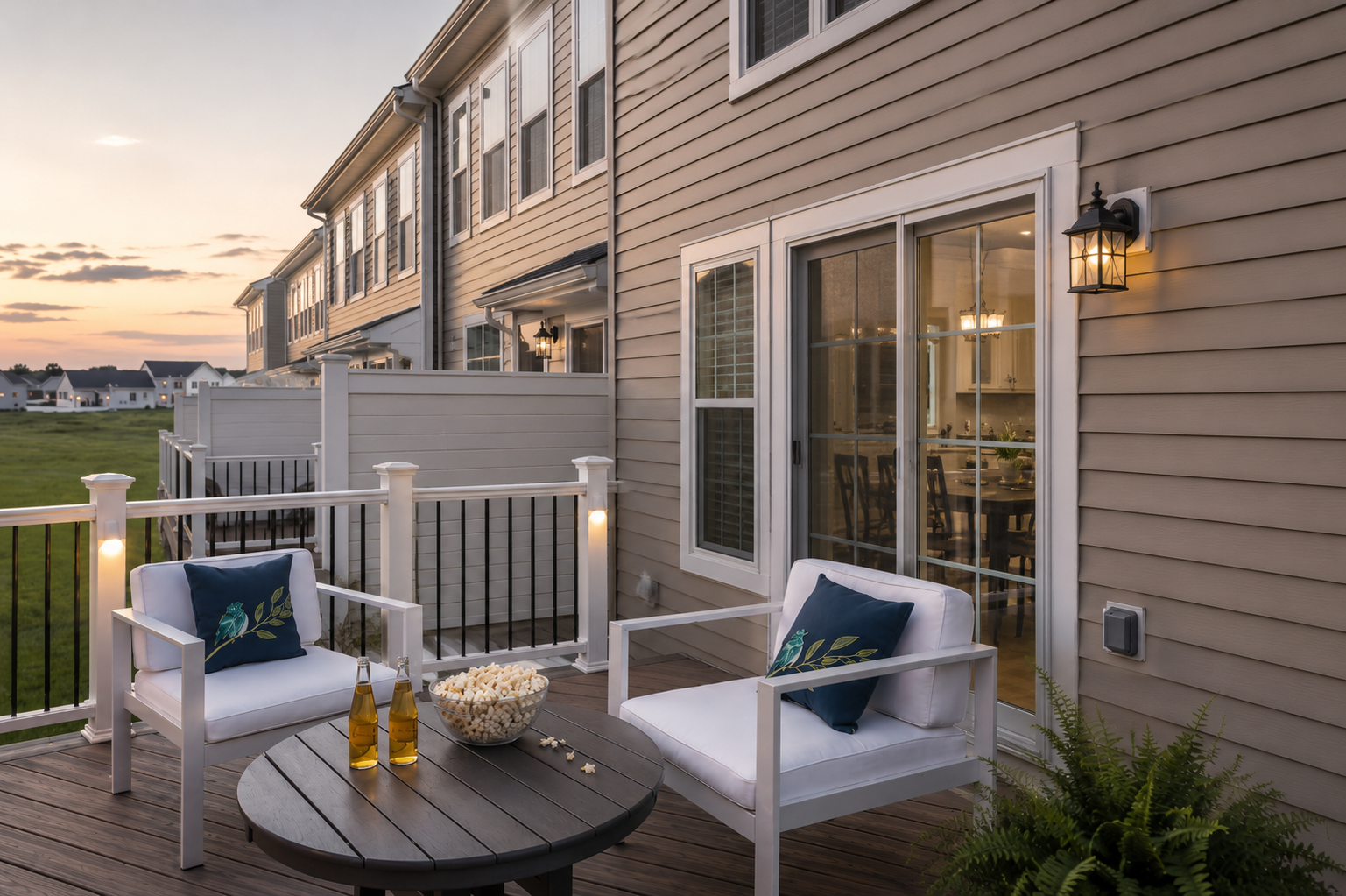
Deck issues can start small: a loose railing, a soft board, or a stair that feels slightly uneven. Those details matter because decks are both living spaces and structural systems.
For HOA and condominium communities, deck safety also affects resident confidence, maintenance planning, and consistency across units.
Visible Signs That Deserve Attention
Decks should feel solid underfoot. If a surface, railing, or stair section feels loose, moves unexpectedly, or shows decay, it is worth having the condition reviewed before it becomes a larger issue.
- Deck boards feel soft, spongy, cracked, or unstable.
- Railings move when pressure is applied.
- Stairs shift, sag, or show worn treads.
- Fasteners are rusted, missing, or backing out.
- Water collects against the house or around framing connections.
Why Deck Problems Should Not Wait
Deck issues rarely improve on their own. Moisture, freeze-thaw cycles, and everyday use can continue to stress boards, stairs, posts, and connections. Early planning gives owners or boards more control over budget and schedule.
Questions To Bring To The Estimate
- Is this a single deck, several decks, or a community-wide scope?
- Are railings, stairs, landings, privacy walls, or trim included?
- Are there access restrictions behind the building?
- Does the association have material or color requirements?
Replacement Versus Spot Work
If one deck is damaged because of a specific issue, spot work may be part of the conversation. When the same problems appear across several decks, replacement planning can offer a cleaner long-term solution.
Fox Chase helps clients understand the visible condition, organize the project scope, and plan work in a way that respects residents and the property.